
Make complex systems visible, legible, and easier to manage.

Modern technology. Midwest roots.
Solutions inspired by Missouri's rivers, forests, and landscapes, built for operational clarity, durable systems, and responsible scale.
Build systems that are easier to understand, operate, and trust.Technology that flows. Partnerships that last.
Help teams understand ownership, access, policy, risk, and change.
Reduce repeated work and build processes that can grow without becoming fragile.
Identity System
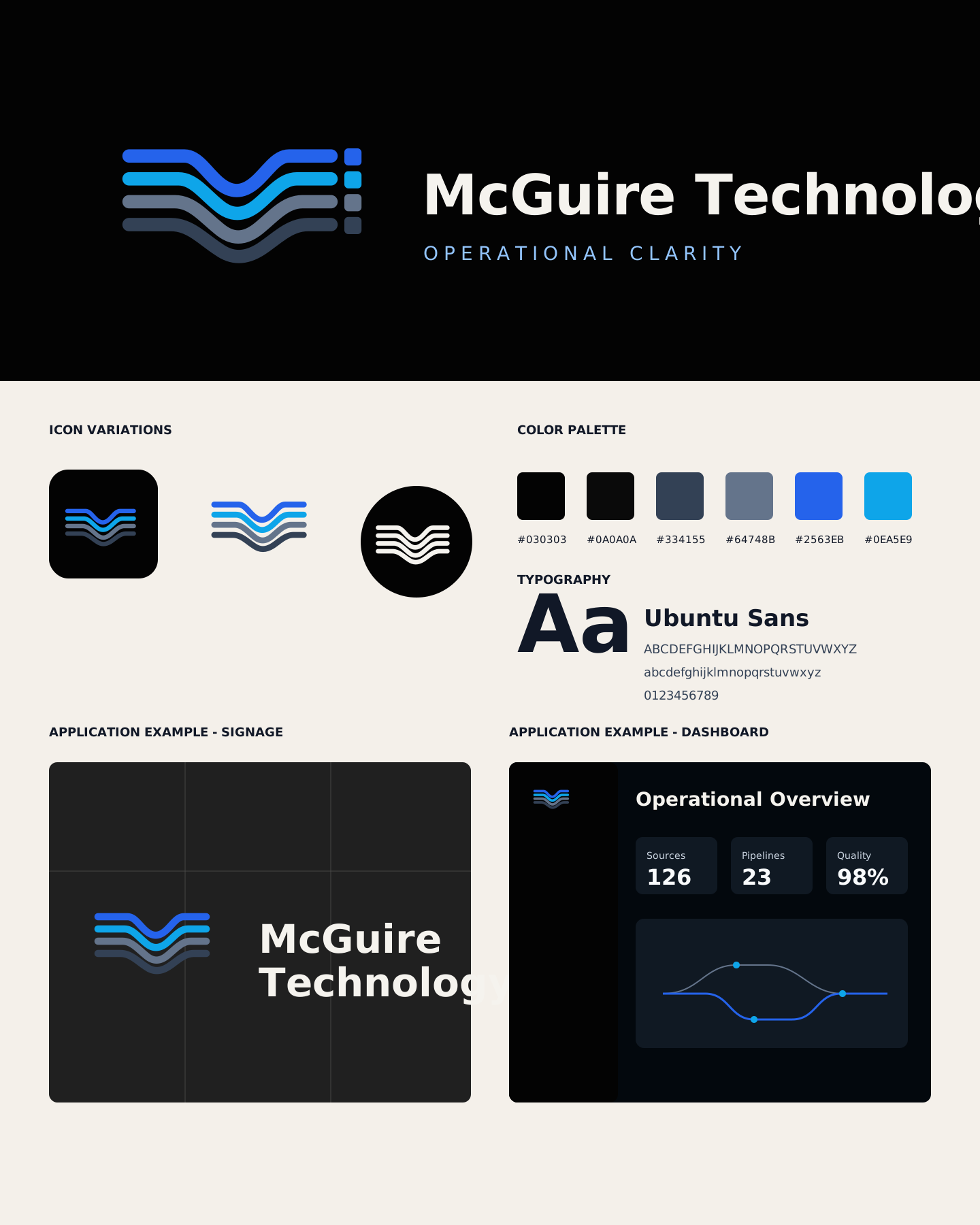
A routed M mark, practical wordmark, warm dark surfaces, and a Missouri-rooted palette create a brand that feels capable and grounded.


Palette
This site is the public branding reference for McGuire Technology™. It defines how the brand should look, sound, and be referenced across public sites, project documentation, proposals, products, and internal tools.
Brand Position
McGuire Technology™ creates practical technology systems for organizations that need clarity, control, automation, and operational maturity.
The brand belongs in the space between software engineering, infrastructure, operations, governance, and technical strategy. It should feel capable enough for enterprise work while staying personal, direct, and grounded.
Brand Promise
Build systems that are easier to understand, operate, and trust.
Public Impression
McGuire Technology should be presented as a builder of durable software systems and operational tools. The public-facing impression should be concise, capable, and grounded in real work.
The brand should showcase:
- practical software engineering
- infrastructure and automation experience
- systems thinking
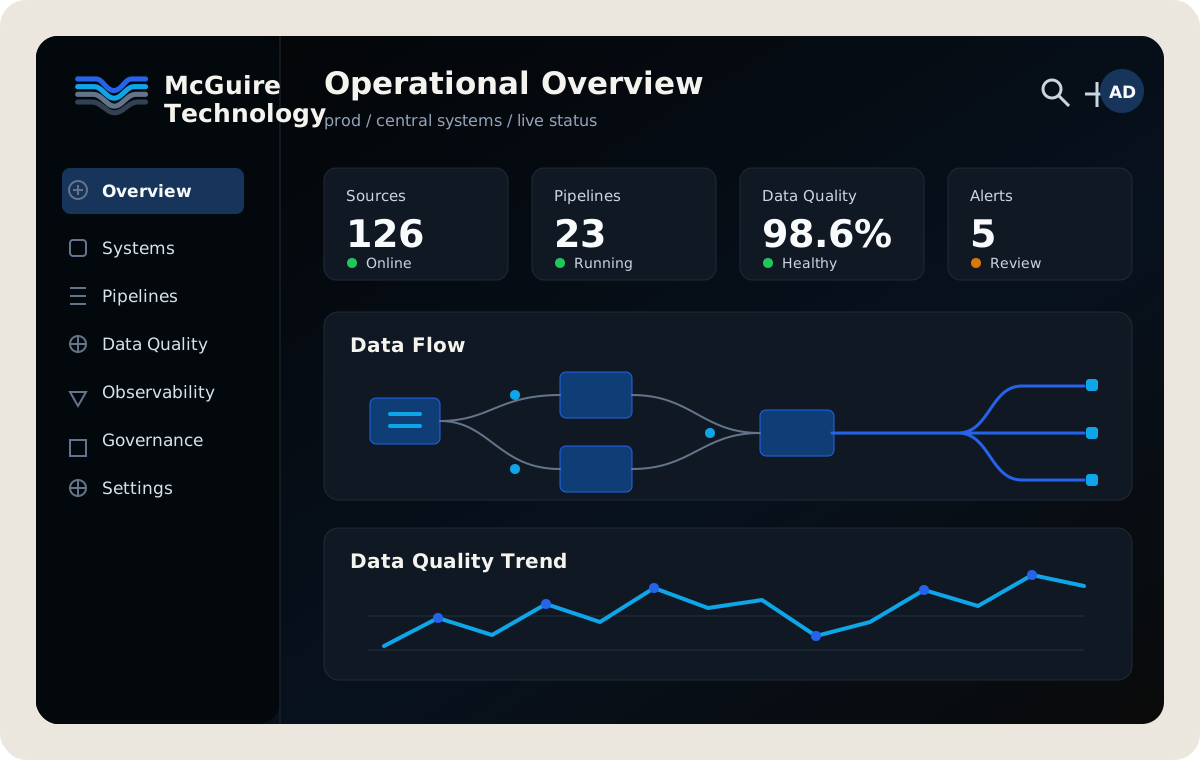
- operational dashboards and internal tools
- documentation discipline
- long-term maintainability
The site should answer a simple question for other projects: how should McGuire Technology look, sound, and be referenced?
Core Idea
McGuire Technology builds and organizes software systems for real operational environments: places where visibility, governance, automation, reliability, and maintainability matter.
The brand should communicate:
- clarity over noise
- architecture over improvisation
- practical outcomes over hype
- systems that can be understood, operated, and trusted
Brand Traits
Primary traits:
- competent
- structured
- grounded
- modern
- calm
- precise
- infrastructure-aware
Secondary traits:
- pragmatic
- thoughtful
- durable
- security-conscious
- documentation-friendly
- systems-oriented
- governance-conscious
Avoid:
- loud cyberpunk aesthetics
- hacker clichés
- neon overload
- generic startup hype
- corporate stock-photo clichés
- vague transformation language
- decorative complexity
- overpromising buzzwords
Archetype
Primary archetype: The Architect
Secondary archetype: The Steward
The Architect gives the brand structure, planning, and systems thinking. The Steward keeps it responsible, maintainable, and oriented around long-term usefulness.
Messaging Pillars
Operational Clarity
Make complex systems visible, legible, and easier to manage.
Governance and Control
Create tools and patterns that help teams understand ownership, access, policy, risk, and change.
Automation and Scale
Reduce repetitive work and build processes that can grow without becoming fragile.
Observability
Design systems that expose meaningful signals, not just raw activity.
Sustainable Infrastructure
Prefer maintainable foundations over short-lived novelty.
Visual Direction
The visual identity should feel structured and technical without becoming sterile. It should suggest infrastructure, alignment, control surfaces, system maps, and dependable tooling.
Useful visual influences include enterprise observability platforms, modern DevOps tooling, cloud infrastructure brands, and technical drafting aesthetics.
Recommended direction:
- minimal geometric marks
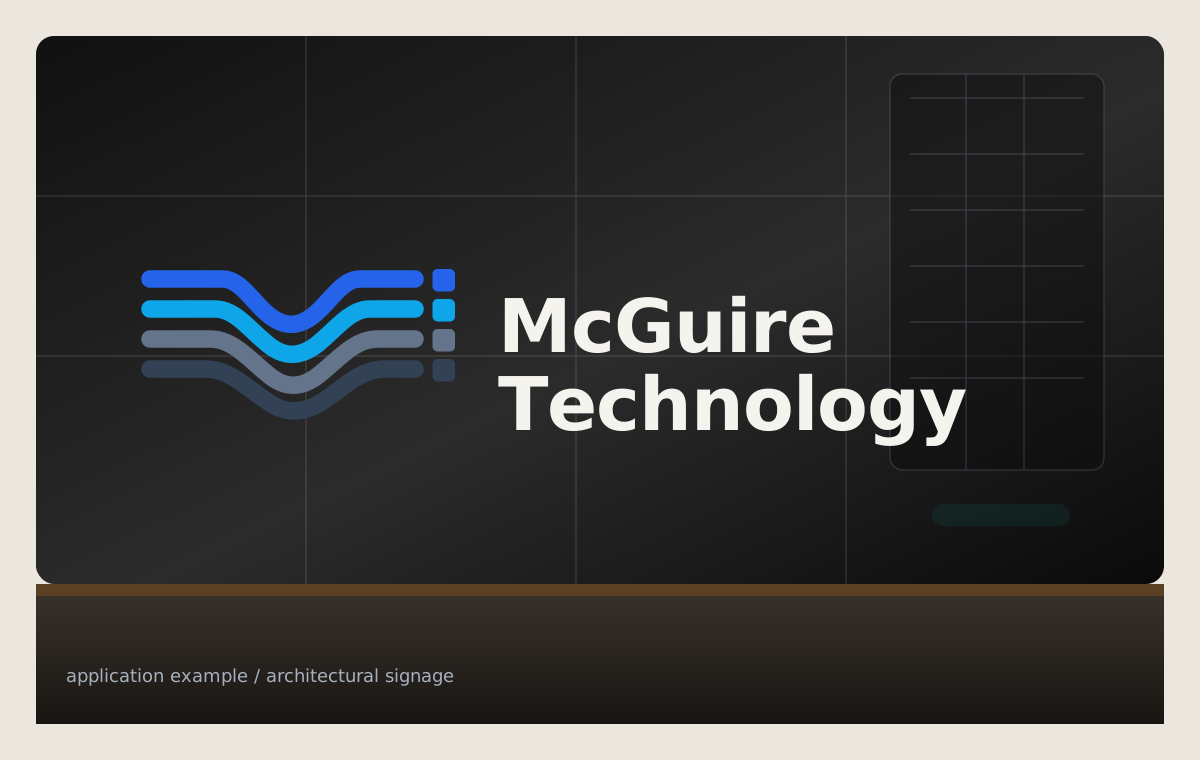
- full McGuire Technology wordmark as the primary identity
- single M mark only when a compact symbol is necessary
- system, grid, or architecture-inspired marks that do not depend on initials
- grid-based construction
- infrastructure-inspired symmetry
- topology, routing, or systems-map influence
- restrained enterprise styling
- thin borders, clear spacing, and calm surfaces
Avoid:
- glowing padlocks
- neon cyber visuals
- fake server-room drama
- generic stock photography
- overly playful SaaS illustrations
- the initials MT as a primary mark, due to ambiguity with unrelated meanings such as Mountain or Empty
Tagline Direction
Primary recommendation:
Operational Clarity
Supporting options:
- Infrastructure with Intent
- Systems Built to Last
- Practical Platforms for Real Organizations
Color Palette
Modern technology. Midwest roots. The palette is inspired by Missouri's rivers, forests, limestone bluffs, working soil, and practical craft.
Foundations
#030303The dark chert and flint found beneath Missouri soil. A foundation of strength and permanence.
#0A0A0AInspired by bedrock and stone. The reliable layer supporting systems and infrastructure.
#ECE7DEMissouri's limestone bluffs and caves. Bright, durable, and timeless.
#F4F0EAThe pale soils and weathered stone of Ozark bluffs. Warm, approachable surfaces.
Accent Colors
#2563EBThe powerful currents of the Missouri and Mississippi Rivers. Primary actions, links, movement, and selected states.
#16A34AMissouri forests and conservation land. Success states, healthy systems, growth, and resilience.
#F59E0BRiver valleys at sunrise and sunset. Warnings, cautions, and important information.
#EF4444Missouri's state bird. Critical alerts, security threats, destructive actions, and urgent states.
#0EA5E9Where rivers and systems meet. Informational messages, orchestration, and secondary actions.
#A16207The rich earth of Missouri riverbanks and farmland. Context, heritage, grounding, and metadata.
#C2410CCraftsmanship, industry, and enduring infrastructure. Premium features, achievements, and milestones.
Semantic Usage Guide
| Purpose | Color | When to use |
|---|---|---|
| Primary actions / links | Current Blue | Calls to action, links, primary navigation |
| Success / healthy | Ozark Green | Completed tasks, healthy systems, positive change |
| Warnings / cautions | Golden Hour | Warnings, threshold notices, review states |
| Critical / errors | Cardinal Red | Errors, security threats, destructive actions |
| Informational | Confluence Blue | Informational messages and secondary actions |
| Heritage / context | Osage Clay | Context, environment, metadata, subtle accents |
| Premium / special | Forged Copper | Premium features, achievements, milestones |
Use accent colors intentionally. The brand should feel like technology that flows and partnerships that last, not a one-color blue interface or a loud rainbow system.
Typography
Primary digital typeface: Ubuntu Sans
Acceptable alternatives:
- Ubuntu
- system sans-serif
Monospace accents:
- Ubuntu Mono
- system monospace
Use monospace type for code snippets, infrastructure references, system labels, technical diagrams, and compact metadata.
Font Specimens
McGuire Technology
Use for documentation, product UI, navigation, labels, body copy, and most public brand surfaces.
Practical technology systems for operational clarity, automation, governance, and reliability.
Regular 400Medium 500Bold 700
ABCDEFGHIJKLMNOPQRSTUVWXYZ
abcdefghijklmnopqrstuvwxyz
0123456789 .,:;!?'"()[]{} / \ | @ # $ % & * + - =
< > ~ ^ _ ` TM ™ ® © § ¶
Operational Clarity
Use for page titles, section openers, pull quotes, presentation covers, and moments that need more brand character.
Systems built to last need language that feels calm, capable, and human.
Regular 400Medium 500Bold 700
ABCDEFGHIJKLMNOPQRSTUVWXYZ
abcdefghijklmnopqrstuvwxyz
0123456789 .,:;!?'"()[]{} / \ | @ # $ % & * + - =
< > ~ ^ _ ` TM ™ ® © § ¶
system.status = reliable
Use for code, CLI examples, IDs, config keys, environment names, version strings, and compact technical metadata.
deploy --target=prod --region=us-central-1
Regular 400Bold 700
ABCDEFGHIJKLMNOPQRSTUVWXYZ
abcdefghijklmnopqrstuvwxyz
0123456789 .,:;!?'"()[]{} / \ | @ # $ % & * + - =
< > ~ ^ _ ` => -> :: && ||
99.98% uptime
Use Ubuntu Sans for metric labels and Ubuntu Mono for dense values that need alignment or quick comparison.
Requests1,284,096
Error rate0.017%
Latency p95184 ms
2026-06-09 22:14:08 UTC
+12.4% -03.8% 0.00042 8/16 nodes
McGuire Technology
Use for early wordmark studies, project mastheads, badges, lockup exploration, and strong brand moments.
MCGUIRE TECHNOLOGY™
McGuire / M / mcguire.tech / operations / controls
Product Naming
Product and project names should be clear, modular, and operational. Prefer names that sound like systems, capabilities, or control surfaces.
Useful naming territories:
- Assets
- Controls
- Operations
- Observe
- Orchestrate
- Ledger
- Identity
- Flow
- Nexus
Naming guidance:
- Lead with function before metaphor.
- Prefer names that can survive enterprise use.
- Avoid names that depend on jokes, trends, or temporary technology waves.
- Keep room for a product family under the McGuire Technology parent brand.
UI Design Language
Digital products should feel like serious tools for repeated use.
Preferred UX framework:
- shadcn/ui for React and Next.js product interfaces
- Tailwind CSS semantic tokens for color, spacing, and state
- source-owned components that can be adapted per project without losing consistency
Use:
- dashboard-first layouts
- clear tables and filters
- restrained cards
- practical empty states
- compact metadata
- subtle shadows
- thin borders
- generous but efficient spacing
- visible system status
- shadcn/ui primitives such as Button, Card, Table, Badge, Tabs, Dialog, Sheet, Sidebar, Command, Alert, Empty, Skeleton, and Tooltip
Avoid:
- marketing-heavy layouts inside operational tools
- oversized decorative cards
- ornamental gradients
- vague iconography
- text that explains the UI instead of making the UI obvious
- raw one-off controls when an established shadcn/ui component would provide better consistency
Preferred UX Framework
Use shadcn/ui as the preferred UX framework for McGuire Technology web applications and operational tools.
shadcn/ui fits the brand because it is practical, composable, source-owned, accessible by default, and well suited to dashboards, internal tools, documentation-heavy workflows, and enterprise product surfaces.
For Vue and VitePress contexts, use shadcn-vue.
shadcn-vue
Preferred UX Framework
Source-owned Vue components, semantic tokens, and restrained interface patterns for McGuire Technology product surfaces.
Primary Action
Secondary Action
Implementation guidance:
- Use existing shadcn/ui components before creating custom controls.
- Compose interfaces from stable primitives rather than ornamental one-off layouts.
- Use semantic tokens such as
background,foreground,primary,muted,border, anddestructive. - Prefer
Button,Card,Table,Badge,Tabs,Dialog,Sheet,Sidebar,Command,Alert,Empty,Skeleton,Tooltip, and form components for common product patterns. - Use variants and component composition before custom styling.
- Keep custom styling focused on layout, brand polish, and product-specific needs.
- Pair shadcn/ui with Ubuntu Sans, Ubuntu Mono, and the McGuire Technology color palette.
Imagery Style
Use:
- diagrams
- infrastructure illustrations
- topology maps
- architectural visuals
- technical workflows
- abstract geometry
- product screenshots that show real system states
Avoid:
- fake corporate stock scenes
- people pointing at laptops
- handshake imagery
- glowing padlocks and cyber clichés
- decorative visuals that do not explain the work
Brand Governance
The brand system should eventually define:
- logo clear space and minimum size
- favicon and app icon variants
- monochrome usage
- dark mode and light mode usage
- prohibited distortions
- horizontal and stacked lockups
- proposal and presentation templates
- product iconography
- dashboard UI patterns
- product-specific sub-brand rules
Brand System Roadmap
Phase 1:
- logo
- favicon
- typography system
- color palette
- basic usage guide
Phase 2:
- website design system
- slide deck templates
- proposal templates
- product iconography
- dashboard UI kit
Phase 3:
- illustration library
- icon system
- collateral standards
- brand voice handbook
- product-specific sub-brand rules
Reference Sections
Use the supporting sections when you need implementation detail:
Licensing Note
Code, templates, and reusable technical materials may be licensed separately from the brand itself. The McGuire Technology name, logos, marks, and official visual identity remain proprietary brand assets unless explicitly stated otherwise.